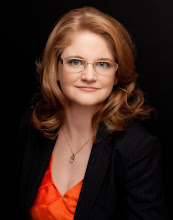
We are thrilled to confirm that Dr Danny Sullivan, forensic psychiatrist at Forensicare, will be one of our guest examiners for the first week of the P2P OSCE series.
Dr Danny Sullivan is an international expert on forensic psychiatry and also a great teacher. We are very excited to hear what he has to teach us all about this important area of psychiatry that receives little formal exposure in psychiatry training.
As with our last session, there is an opportunity for you to come into the office and participate in role plays under OSCE examination conditions, or take part via our live webstreaming online. If you are able to watch YouTube® on your computer, you have sufficient technology to view this event. In the last series we had registrars dialling in from all over Australia and New Zealand!
The P2P OSCE series has been designed to run over four consecutive Thursday nights, commencing Thursday 20 August 2009. Each night we focus on a clinical area and run through two OSCE scenarios, using professional actors as patients. The guest examiners are chosen as experts in their field and have plenty of time to give feedback as well as discuss their areas in detail. This is the only forum of its kind and the feedback from our participants in March 2009 was amazing.
Registered participants will be able to watch the archives as well, and hence continue to study right up to the examinations.
Please register interest on our website or via info@cpdformulations.com.au. All new registrants to our P2P database receive a complimentary USB memory stick that contains study tips and resources to get you started with you clinical examination preparation. Can’t wait to hear from you!
Monday, June 22, 2009

Wednesday, June 17, 2009
Don’t blog it ‘til you try it
We have been working very hard in what is proving to be a growth phase; after launching several successful educational campaigns in the first quarter of 2009, we are now creating a new range of programs. Hence, the delay in getting this blog entry uploaded; we wanted to write about what we had done rather than what we planned to do!
So what are we trying? Well, we have been noticing how little there is in the way of professional development programs for doctors that teach non-core clinical skills; courses that other professions would take for granted. So we have decided to tackle this issue head on to fill this void. We will be adding to our established programs that include Present to Pass®,, and the P2P OSCE series throughout the rest of 2009.
So what are we trying? Well, we have been noticing how little there is in the way of professional development programs for doctors that teach non-core clinical skills; courses that other professions would take for granted. So we have decided to tackle this issue head on to fill this void. We will be adding to our established programs that include Present to Pass®,, and the P2P OSCE series throughout the rest of 2009.
 Our videos will soon be available for download directly from our site.
We have sourced an Australian based company that offers plug in solutions to our website that will enable you to download these programs. And our production company, Production Video, has been busily filming and editing footage we have created in our studio. In addition, we have been running focus groups to address other key areas that are under wraps until launched in the near future. Sounds exciting? Well keep in touch via our website to find out more, or join our mailing list!
Wednesday, June 3, 2009
The need for medical education. Do we need pharma or not?
I have a unique perspective because some ten years ago I worked in the pharmaceutical industry, before starting my medical degree. I was a qualified pharmacist and sick of the ‘shop work’ that was selling cosmetics and processing medical insurance claims. Back then the pharmaceutical industry was less regulated and direct marketing was ‘de rigeur’.
Whilst at medical school and as I trained as a psychiatrist I have seen a big change; an evolution spurred by extensive external scrutiny and mass investigation by competitors. Companies are distancing themselves from direct marketing, the key note speaker road shows and the expensive launches of new products. It is a pleasure to work with the pharma companies in this role as medical education provider, using educational grants to develop niche areas of clinical discovery such as HIV medicine and mental health, sleep disorders and psychiatry, and so on.
I was honoured to be invited to the recent episode of Insight on SBS to explain my viewpoint on this important interface between medicine and the pharmaceutical industry. Sadly, I was forbidden to speak to the media as part of my contract as an employee of a major teaching hospital. The discussion I witnessed was lacklustre and predictable; we need to challenge the boundaries and explore how we can work together to achieve the best outcomes for patients. I hope we continue to challenge this interface and work together in the future.
Whilst at medical school and as I trained as a psychiatrist I have seen a big change; an evolution spurred by extensive external scrutiny and mass investigation by competitors. Companies are distancing themselves from direct marketing, the key note speaker road shows and the expensive launches of new products. It is a pleasure to work with the pharma companies in this role as medical education provider, using educational grants to develop niche areas of clinical discovery such as HIV medicine and mental health, sleep disorders and psychiatry, and so on.
I was honoured to be invited to the recent episode of Insight on SBS to explain my viewpoint on this important interface between medicine and the pharmaceutical industry. Sadly, I was forbidden to speak to the media as part of my contract as an employee of a major teaching hospital. The discussion I witnessed was lacklustre and predictable; we need to challenge the boundaries and explore how we can work together to achieve the best outcomes for patients. I hope we continue to challenge this interface and work together in the future.
Monday, June 1, 2009
Highlights from San Francisco APA
 The APA conference was such an amazing experience, but two presentations really stood out.
The first was given by Maureen McCormick (above), the actress who played Marcia Brady on the Brady Bunch. Each year the APA invites a famous person to come and talk about their experiences as somebody experiencing mental illness. I was obsessed by the Brady Bunch growing up, and to see “Marcia’ and hear her speak about her life was such a big thrill.
 The other highlight was listening to the incredible Irvin Yalom (above). He presented to a packed house and every minute of his presentation was enthralling, He discussed his thoughts on existential psychotherapy in such an enlightening way, and then moved into his later areas of interest about death anxiety. Something I’ll never forget.
Thursday, May 21, 2009
When size does matter
Greetings from the APA, in San Francisco!
I’ve managed to avoid the scientologists at the front door of the Moscone Centre, who believe psychiatrists are “Agents of Death” as per their placards. I listened to the presidential address which answered critics from the New York Times, who reported last year that there was a very unhealthy relationship between the America Psychiatry Association and the pharmaceutical industry.

And then I witnessed the most amazing thing. Not a single promotional item in sight in the exhibit hall, and no pharmaceutical branding or items in the conference satchel. No giveaways, no pens, no nothing. In fact, the only resource the pharmaceutical companies had to promote their wares were the biggest trade displays I have ever seen. Things were so bad that I had to write notes from the sessions on the one piece of paper available in the hotel room.

I’ve managed to avoid the scientologists at the front door of the Moscone Centre, who believe psychiatrists are “Agents of Death” as per their placards. I listened to the presidential address which answered critics from the New York Times, who reported last year that there was a very unhealthy relationship between the America Psychiatry Association and the pharmaceutical industry.
And then I witnessed the most amazing thing. Not a single promotional item in sight in the exhibit hall, and no pharmaceutical branding or items in the conference satchel. No giveaways, no pens, no nothing. In fact, the only resource the pharmaceutical companies had to promote their wares were the biggest trade displays I have ever seen. Things were so bad that I had to write notes from the sessions on the one piece of paper available in the hotel room.
Has this gone too far? I personally think it has. I do believe that there is something wrong in taking money from the companies to sponsor the event with nothing in return. And I think it is blatantly stupid to suggest that doctors are influenced by what pens they have on their desks.
So if these things are not supplied and this is the step the APA has taken, then surely they could have put a couple of pens and a notepad in the satchels. And it would have been nice to have meals provided throughout the day; there was no food served at all. And it wasn’t cheap to get here. I paid $250 AU per workshop on top of my registration fee of almost $1000. The full day workshops did not include any food either.
Tuesday, May 19, 2009
What do you know about HIV psychiatry?
 This is a really big area of psychiatry in America, and there are alarming trends regarding the rise of HIV and the presence of psychiatric illness in people as they live longer with HIV. In particular, the combination of HIV and methamphetamine use is attracting much interest. Our HIV summit in February explored key areas of HIV psychiatry including neurodegenerative disorders, major depression and substance use. We hope to be delivering a similar summit in 2010.
Subscribe to:
Posts (Atom)